3/25/2026

speaker
Operator
Conference Operator

All participants will be in a listen-only mode. There will be an opportunity to ask questions later during this call. If you should need assistance during this event, please signal an operator by pressing star then zero. Please note that this event is being recorded. I will now hand over the conference to Chief Executive Officer Yanni Girand. Please go ahead, sir.

speaker
Yanni Girand
Chief Executive Officer, Remgro

Good morning, everybody. Thank you for joining us this morning and welcome to our interim results presentation for the six-month period ended 31st of December 2025. Today we will unpack our financial performance for the first half of this financial year, and as become our standard approach, we will also spend time on the performance of our key portfolio companies that continue to shape our overall results. With that in mind, the outline of today's presentation will be as follows. Firstly, I will give an overview of the salient features of our performance. including the ones that reflect our focused execution against our strategic priorities. Secondly, our Chief Investment Officer, Carl, will give an update on some of the key corporate actions that are central to our portfolio simplification and optimization journey. Then, Neville, our CFO, will take you through the financial results in more depth. And finally, I will turn to updates from our major investments. The CEO of MediConnect, Ronnie, and the CFO, Jurgens, will speak to MedicNIC's results and progress on strategic priorities. Then after that, the Managing Director of Heineken, Jordi, and his new appointed Chief Finance Officer, Raduwan, will together do the same for Heineken Beverages. And then the CEO of Massive, Dietlof, will do the same for CIVH. And finally, the COO of RCL, Paul, will provide highlights of the results they reported on earlier this month. I will then close off the presentation by looking at our areas of focus going forward before opening the floor for questions. This morning, I'm extremely pleased to present interim results that show sustained strong earnings growth across our portfolio. Even more encouraging is that this earnings momentum has translated into strong cash generation at the center, enabling us to return value to our shareholders with a significant uplift in our interim dividend. For this period under review, headline earnings increased by 38.5%, and alongside this, cash earnings at the center strengthened materially, with dividends received at the center up roughly about 34%, supporting an interim dividend increase of approximately 80%, a significant return of value to our shareholders. The main drivers of this earnings growth were stronger contributions from Mediclinic, CIVH, Rainbow, and Heineken beverages. Ignoring the distributions of the period, our INF increased by 1.6% over the period, which is more modest than the growth of our earnings in a function of valuation movement across our listed and unlisted portfolio. But this is a good indication that the increase in the underlying earnings of our company substantially reflect our own valuation models. As I reflected on this marked progress, it is clear that these results demonstrate the resilience of our portfolio, the benefits of disciplined, focused execution, and strong partnerships with our various management teams. By the same token, it would be remiss of us not to reflect on the impact of the operating environment which we and our investee companies continue to operate, which I'm sure this audience is all too familiar with. Global trade tensions, geopolitical instability, and muted domestic growth remain persistent headwinds. Although extensively analyzed, the speed of changes and the resultant unpredictability make forecasting the impact difficult at this stage. Very importantly for us, we must not forget about our colleagues of ours that work in defected regions. Our thoughts are with them in these difficult circumstances, and we applaud them for the resilience and the courage that they show. Instead of dwelling on what is outside our control, though, our focus remains where it matters most, managing what is within our control, strengthening the performance of our core businesses, progressing portfolio simplification, and maintaining disciplined capital allocations. These have underpinned the gains we are presenting today. On this slide I want to highlight a few of the positive outcomes that this strategic focus has yielded. I have spoken about the robust growth in earnings and sustained momentum, which we have now seen consistently over multiple reporting periods. This, we believe, speaks to the strategic clarity and disciplined execution. I am pleased with the commitment of our executive teams at the underlying investee companies, which in partnership with Remgra is actively driving performance, which we can be seen in the strong contributions from our previously challenged investees. We are especially pleased with the long-awaited implementation of the CIVH Vodacom transaction, which positioned us to capture the growth potential we've articulated for some time. We've also made some strong progress in simplifying the portfolio, including the sale of our remaining interest in BAT, the distribution of our media assets, and more recently, the monetization of part of our interest in FirstRand, which has significantly de-risked our balance sheet. The proposed restructuring of the MediClinic business further aligns this investment to our strategy and simplifies the group further. The results of all of these deliberate efforts can be seen in the cash generation profile I spoke of earlier, with our sustainable dividends received up by almost 34%. In addition to this incredible growth, special dividends received have also further strengthened our balance sheet and offer us strategic optionality to navigate the current volatility but also in pursuing future growth opportunities. Ultimately, these results are a clear payoff from strategic clarity, focus execution, and consistency. Very importantly, whilst we are and must celebrate these wins, performance optimization with a dynamic execution across our portfolio remains key to maintain this momentum. particularly with reference to some of our businesses that are still facing some challenges currently, like RCL, especially regarding regulatory issues and the challenging market dynamics. But Paul will elaborate on this further. We also experienced some sharp focus on the volume pressures through aggressive pricing trends that we see in the overall beverage market that impacts Heineken beverages. Jody will also look into that in a bit more detail. Even so, we remain confident in the long-term growth potential of the portfolio. Today's results show that our focus is working and our job is to sustain this momentum. The question of our capital allocation posture understandably featured prominently in all discussions. We think about capital allocation through three pillars. Strengthening the balance sheet, supporting portfolio growth, and delivering value to our shareholders. The strengthened balance sheet of us has created a solid foundation for growth while enabling a meaningful improvement in returns to our shareholders through higher dividends and other value-creative returns of capital. We continue to consider and evaluate options to crystallize value, and that includes share repurchases. We are actively assessing new investment opportunities with greater emphasis on building our new business development pipeline. Key for us is that we view our strong balance sheet as a critical and strategic asset, particularly in this period of heightened volatility. We have been intentionally conservative in our cash preservation posture and believe that this position us well to act on growth opportunities as they come. I will now hand over to Carl to provide an update on our key corporate actions.

speaker
Carl
Chief Investment Officer, Remgro

Thank you, Yanni, and good morning, everyone. I wanted to provide an update on corporate actions at two of our investee companies. The first one of those is at CAVH, and shareholders would be familiar with the Vodacom transaction that we've been talking about for the last number of years now. So as shareholders would remember, Vodacom injected cash and shares into Massive for a 30% shareholding in Massive. and then also acquired shares at the CAVH level for R1.8 billion, and that resulted in a pre-implementation dividend from Massive into CAVH and from CAVH ultimately to shareholders. As Yanni mentioned, we're very pleased to have got this transaction done towards the end of last year. It brings a very strong strategic partner to our business. It allows us to accelerate the scaling of the network, including to previously underserviced communities. It also gives us greater balance sheet flexibility, and I'm really pleased to finally have got this done. The second transaction is the second leg of the Eurotel acquisition. Again, we remind shareholders that Eurotel is a service provider mostly in secondary cities and rural towns. They've got an incredibly strong management team, a really great recipe for rolling out infrastructure in this segment of the market. and a great complement to what we currently have in vumatel so again very excited at the prospect of of getting this transaction done it increases our infrastructure our economies of scale and improving unit economics so just to reflect a little bit on the the timeline for these two transactions where we've come from to to where we are It's now almost five years ago when we initially announced the Vodacom transaction at the back end of 2021, and fair to assume it had a fair run-up to get to that point of announcement. So it feels like we've been busy with this for a while. But soon after that, we announced the first leg of the Eurotel transaction, so the acquisition of that first 48%. That was in early parts of 2022. And then things took a little while, but very pleased in August last year to finally get the approval from the competition authorities for the Vodacom transaction. And then relatively soon after that, at the beginning of December, we implemented that transaction. Just to remind people, when Dietlof later speak about the results for CAVH, that's up to the end of September, so it doesn't yet include the Vodacom assets in those numbers. But obviously in time to come, we'll see the impact of that. Back to the timeline then, in December of last year, we were then also pleased to obtain the Competition Authority's approval for the second leg of the Herital transaction, and the only CP that's outstanding there is the CASA approval. And we hope that would be imminently forthcoming. So to remind people what that then looks like in terms of the shielding structure, previously CAVH used to own 100% of Massive. Vodacom now is introduced alongside CAVH with that 30% interest. They obviously bring their assets and the cash, or they brought their assets and cash, and in the process of integrating those assets into VUMA and DFA assets. At the bottom of the slide, you can then also see whether the warehousing vehicle that Trust sits as a shareholder in Herotel with a 49.9%, and when that transaction is approved, hopefully Boomer would end up with 99.9% of Herotel. Maybe a slightly more interesting slide. Hopefully, there are so many moving parts on the valuation of CAVH that we thought we should unpack them separately. And the first part that we thought would be useful to explain to shareholders is just the impact. that the Vodacom transaction has on our valuation as existed at the end of last year, so at the end of June, our year end, June 25. So this is not an updated valuation that you will see later, and Neville will talk to that, but just to give you an impression of the impact of the transaction on the valuation as it stood. So 15.8 billion rand was the INAV value that we attributed to CIVH. If you then add the Vodacom assets and shares that they brought and apply our pre-dilution interest to that, that increases the value by 7 odd billion rand. Vodacom, rather CAVH, then paid a pre-implementation dividend, which was upstream from Massive. So Remgrove's share of that was 2.66 billion rand, so that comes out of the value. And then, of course, we diluted by 30% alongside other shareholders for Vodacom's entry. That takes another 5.7 out. And then we applied the discounts that were embedded in our valuation to the Vodacom assets that were added, but we also slightly increased dividends. a non-controlling discount to the overall valuation. And after all of that washes out, you will see that the valuation ends up almost at exactly the same place where it started, the 15.8, after you take into account the dividend that's been received and now sits in cash in our hands. So just what remains for CAVH on these, let's call them legacy transactions. On the Vodacom side, investors would remember there was also a 5% option for Vodacom to buy an additional 5% in massive effectively directly from Remgrove. That transaction, the price for the transaction is at fair market value. That will be determined at that point in time. But there is an underpin to that price of R43.7 billion. That number might not sound particularly familiar, but just to explain that. The transaction value for the base deal was 36. That stepped up to 37 for this option. Then you have the $11 billion of assets and shares that came in from Vodacom, less the pre-implementation dividend that came out of massive of 4.2, and that gets you to the 43.7. So that's the floor value, if you like, for the exercise of this option. We extended the option period to the end of March 2027. Then on the Eurotel side, upon approval of the second leg and the acquisition of that 49.9% stake from the trust, CAVH will acquire those shares and then will inject those shares into massive for additional shares. The price for that, again, would be at fair market value as would be determined at the point in time, but again with an underpin of R2.75 billion. Vodacom would likewise bring cash for that same amount, that's 8.25 million at the floor price, and that cash would be upstream from Massive into CAVH, and that would effectively restore CAVH or rather Vodacom's 30% stake in Massive. So a few sort of complicated steps, but the only thing to tune into there is the end product would be that Herotel would sit inside, or 99.9% of Herotel would sit inside Vuma. and CAVH would have an additional 825 million Rand of cash. On to the second transaction that we will second at Vestide that we want to talk about, which is Mediclinic. Towards the end of last year, we announced a proposed transaction and the in-principle agreement that we reached with MSC to exchange our respective interests in Hearst London and Mediclinic Southern Africa. So, as per the announcement, what we had agreed is that after this exchange, Remgro would end up with 100% of MediClinic Southern Africa and MSC with 100% of Hirsch London. And that will be done on a value-for-value basis, so basically exchange it for equal value. And we would continue as 50-50 owners of the rest of the business, which is our Middle Eastern business, and then also the 29.8% stake that we own in Spire. An important feature of that transaction is that the exchange ratio or the values that we used were arrived at with the balance sheets as they existed at the end of June last year. So to keep the integrity of those valuations, we've got a lockbox in place on both the South Africa side and in Herscheland. And simply what that means is that the value and the cash that accrues in those respective entities are trapped in those entities for the benefit of the future owners. So to the extent that there are dividends that need to flow out or capital injections that need to go into either of those businesses, that would be adjusted and then there would be a sort of cash equalization mechanism to cater for that. the future operating model is in progress but what will ultimately happen is that the group services will be increasingly decentralized and will get to a point where each three of those regions can basically operate as independent businesses we foresee that there would be some limited transitional services that would be provided but substantially the businesses would be able to operate on their on their own Just to recap on the rationale which we had set out in the announcement as well, we believe that aligning the shareholding with the markets where the respective shareholders have the deepest understanding and the greatest conviction on strategy, that would improve the agility in execution. And certainly from Remgrove's point of view, we think that It aligns with our own investment thesis of having ownership, full ownership of a market-leading asset in our home market that we know and understand. Just to remind the audience what it is about MediClinic, Southern Africa that Remgrove finds attractive. It's a large hospital group. We've got 20-odd percent share of the private hospital market, 50 hospitals, 15-day clinics. Really strong management team, market-leading EBITDA margins, and a consistently healthy earnings and cash flow generator. The picture is not particularly complicated of how it will change. You'll see at the moment our partners MSC and ourselves own into a vehicle that owns 100% of the three regions and then also the stake in SPA, as we mentioned, and that will simply change so that those two regions, Switzerland and Southern Africa, are owned by the shareholders directly. A few more sort of steps and gymnastics to get there, but the picture in the end is quite easy to tune into. Hopefully a slide that's helpful for investors just to understand how we get to the answer. There's no new information on this slide, so this is information that is available either in the initial announcement and on the Mediclinic results announcement for September. But we thought helpful perhaps to step people through how one gets to sort of a value equality between these two regions. We announced in December that the implied EV EBITDA multiples for Southern Africa and Switzerland were 6.3 and 9.4 respectively. So if you apply those multiples to the last 12-month EBITDA as that existed at the end of September, And then you can calculate the enterprise value and just to look at the dollar enterprise values for South Africa that means just short of $1.6 billion and the case of Hearst London that comes to $3.3, almost $3.4 billion. So clearly Hearst London is a meaningfully bigger business if you just look at the enterprise value. But then in that second last column, you can see we overlay the debt and other, which is mostly the non-controlling interests. And that then reduces the equity value in both businesses to around $1 billion. Again, these are not the exact numbers as per our valuation. The main reason being that this is using balances as of the end of September as were published. and also FX rates at the end of September. As I mentioned before, our valuation date was at the end of June, so the actual numbers are slightly different, but we still thought a useful indication to help people just to understand how one would get to roughly equal values. And then lastly, just to say what remains to be done, we're in the process of finalising agreements and negotiating the final terms. We will hope to get that done as soon as is practically possible. That will obviously allow us to file the regulatory filings and get that process underway and also to continue the work on the separation and finalising the operating models for the the various businesses, and then obtain the relevant third-party consents that are required, none of which you think would be problematic. So we look forward to updating shareholders again in future on progress. But with that, I'll hand over to Neville to take us through the financial results.

speaker
Neville
Chief Financial Officer, Remgro

Thank you, Carl, and good morning, everyone. The key message of this interim results announcement is that the earnings growth momentum experienced during the 2025 financial year continued during this first half of this current financial year, culminating in the strong growth in headline earnings. So for the period, the six month period under review, RemGrow's headline earnings increased by 38.8% from 3.7 billion to 5.2 billion, while headline earnings per share increased by 38.5% from 6.72 cents to 9.31 cents. This graph depicts an overview of the main drivers of the increase in headline earnings and can be summarized as follows. The increase in headline earnings is mainly due to increased contributions due to improved operational performances from Mediclinic, up by 55% their contribution, Rainbow up by 280 million, which is more than 100% due to the surge in profitability. CAVH up by more than 100%. And this represents a breakthrough to sustain profitability. and Heineken beverages also in a positive turnaround phase, up by more than 100% from a low base. Also, there was an increased contribution from Total Energies, up by $330 million, mainly due to a once-off transit pipeline cost, received during this period. And the increase was, there was also lower finance costs due to the redemption of the preferences during the prior period, and that's an increase of around 95 million Rand. This increase was partly offset by a lower contribution from RCL Foods, down by 31%, largely driven by weaker performance from the sugar business unit. We will provide more detail on these operational results during the presentation. This graph depicts the evolution of and growth momentum of dividends received at the Centre since financial year 2021. The bottom line is the interim period and the blue line is the full year momentum. Dividends received from investing companies is the main component of our cash flow at the centre. In line with the growth momentum in cash flow and headline earnings during the 2025 financial year, RemGrow experienced strong cash flow generation at the centre for this period under review, mainly due to a 34% increase in sustainable ordinary dividends received from investing companies amounting to R2.4 billion. In the previous period, we have received R1.8 billion from investing companies. And this amount excludes the special dividends related to corporate actions, mainly the CAVH pre-implementation dividend. I just want to emphasise that the Board takes into account a full year view of cash flow at the centre when considering the interim and the final dividends for the year. This graph provides an overview of the material changes in the valuations of our unlisted investments, as well as the movement in market values of our listed investments during the period under review. Rengros INAV per share increased by 1.6% from R292.34 at 30 June 2025 to R297.03 at 31 December 2025. And they will see the main drivers impacting positively on the growth in INAV includes an increase in net cash up by 3.7 billion, increase in market value of our listed investments first-hand up by 20%, and Discovery up by 6% and Rainbow by 21%, as well as increases in valuations of some of our unlisted investments, Heinbef up by 12% and Cicalo Foods up by 9%. These increases were partly offset by a decrease in the market value of out-surance, which was down by 8.5% and RCL Foods down by 8.2%, as well as the unbundling of e-media holdings. So if you look at the block there, overall on average, the material unlisted investments valuations increased by 2.3%, while the listed market values decreased by 3.7%. If you look at the block, the INAV before net cash and CDT actually decreased by 0.5%, and from 0.5% to the 1.6% is the uplift in the cash balance from period to period. The net cash increased by 3.7 billion, mainly due to the CAVH pre-implementation dividend of 2.66 billion received upon the completion of the CAVH Vodacom transaction in December 2025. Total increase in INAV is 3.4% if adjusted for distributions made during the period under review, which include the final dividend of financial year 2025 of 248 cents, as well as the special dividend of 200 cents that was paid during this period under review. as well as the unbundling of e-media holdings. The value was around 75 cents per share. I want to make a few remarks about our valuation methodology. We use standardized methodologies and apply them consistently, ensuring the methodology is aligned to best practice. We continue to use the discounted cash flow methodology as our primary valuation approach and use calibrated peer multiples as a reasonability checks of our outcomes. During the six month period, discount rates came down, but we were careful to also moderate the terminal growth assumptions to reflect lower implied long-term inflation. We believe the outcome is valuations which are reasonable but conservative and can stand up to scrutiny. The following graphs show the movement of the valuations and implied multiples of the five largest unlisted investments in Remgrove's portfolio. These investments represent approximately 83% of Remgrove's unlisted portfolio. Changes in portfolio valuations reflect a mix of different factors across the various investments. In most cases, changes have mainly been driven by lower cost of capital with some adjustments to financial forecast and a moderation of terminal growth assumptions as noted earlier. Overall, looking at the multiples, they have remained reasonable when compared to a calibrated peer set. Moving into results overview per pillar, Similar to our year-end presentation and in addition to the INAF and headline earnings disclosure per pillar, we also disclose the cash dividends received for six months as well as the last 12 months headline earnings and dividend yield for improved transparency. The healthcare pillar consists of MediClinic, which is the single biggest investment in Remgrove's portfolio and contributes approximately 24% to INAV and approximately 26% to headline earnings. If you look at the valuation of MediClinic, just remarks on the process, at year end we use a third party to perform an independent valuation, which is audited by EUI's valuations team. At interim, our corporate finance team prepares the valuation, applying a methodology which is closely aligned with the third party's methodology. Remgrove's valuation of its 50% stake in Mediclinic Group increased by 7.4% in US dollars. That's Mediclinic's report in currency. in the context of improved overall performance resulting from good execution on key business priorities in each region. With the RAND strengthening by 6.6% over the six-month period, that valuation increase translates to 0.2% in RAND terms. The valuation is an aggregate of the DCF of the latest business plans for each of the three regions. The implied EV over EBITDA multiple is 9.5 times, calculated using MediClinic's September 2025 published results. This represents a blend of the multiples of the three component parts, each of which we compare to a relevant peer set. Ronnie and Jurgens will unpack MediClinic's results later in the presentation. The consumer products pillar consists of RGL Foods, Rainbow, Heineken Beverages, Cicalo and Capevin, and contributes approximately 16% to INAV and 29% to headline earnings. The platform showed mixed performance for the period. RGL Foods, Cicalo and Capevin saw a decline in headline earnings for the period, with Rainbow increasing substantially. Dividends contribution also improved due to contributions by RCL Foods, Zucalo, and Rainbow compared to the comparative period. RCL Foods contribution to headline earnings decreased, as I said, by 31%, while the underlying headline earnings from continuing operations decreased by just under 22%, largely driven by challenges experienced by the super business unit during the period under review. Paul will elaborate in more detail on RCL Foods results later in the presentation. The contribution by Rainbow increased substantially by 110% to $535 million from $255 million in the comparative period. We are very pleased with Rainbow's results for the six-month period, and Martinez and his team do a great job unpacking those results in the Reason webcast that is available on Rainbow's website. I would also encourage you to view that there. Heinbeff's valuation for its 18% interest in Heinbeff increased by just under 12% over the six-month period to R7.5 billion. In summary, the increase in the valuation is attributed to factors including improved operating margins and decreased cost of capital offset by reduced terminal assumptions. Heinbeck's contribution to headline earnings amounted to a profit of $155 million, delivering a turnaround from a loss of $11 million in the comparative period. This solid financial performance was underpinned by margin expansion and disciplined cost management. Jordi and Radovan will elaborate in more detail on Heineken Beverages' results later in the presentation. Cicalo Foods' valuation increased by 9.1% over the six-month period. Cicalo operate in a persistently challenging trading environment marked by ongoing commodity cost pressures and constrained volume growth. The valuation benefited from a lower cost of capital offset by slightly moderated financial forecast. Their headline earnings contribution amounted to $237 million, representing a decrease of 6.7%. As said before, the trading environment remained challenging due to constrained economic growth, with consumers still under financial strain. Their business volumes remained constrained and decreased by 2.7%. mainly due to the spread's category market volume declining by 2.1% over the last 12 months. The profit margins held steady due to a price increase implemented in March 2025, and by focusing on savings initiatives, the business managed to offset some inflationary costs and increase brand marketing investments. The financial services pillar contributes 21% to INAV, 15% to headline earnings, and 17% to dividends received at the centre. Outsourced Group is the most significant investment here. Their contribution to headline earnings increased by 14.3% to R713 million, mainly due to outsourced holdings normalized earnings increasing by 12.6%. The increase in earnings was driven by strong performance in South Africa and solid organic growth. Outsourced groups released their interim results on the 11th of March 2026. The valuation of Remgrove's 57% stake in CAVH increased by 2.7%. from R15.8 billion at 30 June 2025 to R16.2 billion. This R16.2 billion excludes the CAVH pre-implementation dividend of just under R2.7 billion, which Remgrove received, and on a like-for-like basis, including the dividend, the valuation increase is 19.6%. With the implementation of the Vodacom investment into MASF in December 2025, Remgrove's effective stake in CAVHS operating subsidiary MASF reduced from 57% to approximately 40%. It is pleasing to see CAVHS' potential is now starting to deliver meaningful financial performance, With strong structural fiber demand, an expanding network and greater penetration, Massive has delivered good revenue and earnings growth through increased subscribers and average revenue per user. The valuation benefited from a reduced cost of capital. partially offset by an increase in discounts, as Ditloff will describe later, including those due to the capital structure changes. Given the valuation date of 31st December 2025, the valuation includes the Vodacom assets at acquisition cost, with customary Remgrove discounts applied, rather than adding a forecast DCF for these assets. The 30 June 26 valuation will be done on a business plan with these assets fully integrated into the respective businesses of DFA and Vumatel. CAVH's contribution to headline earnings amount to a profit of R123 million, reflecting a sustainable breakthrough into profitability from a loss of R141 million in the competitive period. These earnings accounted for up to 30 September 2025. Ditloff will elaborate in more detail on CAVH results later in the presentation. The industrial pillar companies are mostly profitable on a sustainable basis and consistent dividend payers with high cash conversion ratios as seen in the contribution to headline earnings and dividends received. Also with attractive earnings yields and dividend yields. Their valuations are also not very demanding. Looking at air products valuation increased by 3.1% in a period. The small increase in value is largely as a result of a decreased cost of capital offset by slightly lower financial forecasts reflecting the tough operating environment. Total energies valuation reduced by 2.4% in the six months. The decrease in value was mainly driven by balance sheet changes combined with a lower terminal growth rate applied. From a results perspective, Air Products' contribution to headline earnings increased by 11.4% to R380 million. This increase is due to moderate growth in tonnage and supply chain businesses, strong performance in the pipeline business, and improved volume and margins in packaged gases, driven by effective commercial management and ongoing cost discipline. Total Energy's contribution to RemGrowth's headline earnings increased by more than 100% to $311 million, but this increase was mainly driven by a once-off Transnet pipeline cost refund, RemGrowth's portion being $218 million in this period, and a good marketing performance partly offset by lower sales due to refinery supply constraints experienced during this period. The net cash at the centre increased by R3.7 billion to R12 billion over the reporting period, and mainly due to the CAVH pre-implementation dividend of approximately R2.7 billion. In addition, to the first-ranked stake at the market value on 31st December 2025, and that $6.8 billion is the after CGT valuation. The total liquidity at the center amounted to just under 19 billion rand. Since December 2025, 52 million first-rand shares have been disposed of for an after-CGT proceeds of 4 billion. I think the gross proceeds was just under 4.9 billion rand. As already said, Remgrove experienced strong cash flows at the centre for the period under review, mainly due to a 34% increase in ordinary dividends received from investing companies, amounting to 2.4 billion. The comparative six months, the amount was 1.8 billion. And this excludes the pre-implementation dividend of R2.7, which is included in the special dividends received bar of R2.8 billion. Remgrove also sold its portfolio stake in BAT for a net proceeds of 1.1 billion and paid a special dividend of 2 rand per share during the period under review, landing at an increase of 3.666 billion for the period under review. This graph depicts the evolution and steady growth in dividends paid since 2021. That's a low base because that year was impacted by the COVID pandemic. Remgrove doesn't have a specific dividend policy, but the general guidance is a payout ratio of approximately 50% of the cash flow at the centre. or a two times cover ratio, and that's depending on the specific circumstances impacting solvency at liquidity at the time of declaration and also considering the foreseeable future. You'll see that in 2025, the cover or the payout ratio was 50%. And I think that conservative posture was at that stage in September when the board decided on a dividend, the CAVH Vodacom transaction as it had been concluded. So the interim dividend, board declared an interim ordinary dividend of 173 cents per share, up by 80.2% from the 96 cents per share in the comparative period. The rationale for this increase is that based on the strong liquidity position, the board has adjusted the dividend cover to approximate 1.5 times for the foreseeable future. In addition, also the weighting between the interim and final dividends have also been adjusted towards the interim dividend. Therefore, the increase of 80% is more pronounced at this interim stage and is not an indication of future dividend increases. So this brings me to the end of my presentation. I will now hand over to Ronnie and Jurgens to talk through MediClinics results.

speaker
Ronnie
Chief Executive Officer, Mediclinic

Thank you and good morning. Before I start, I would like to just mention that the conflict in the Middle East is top of mind for us at MediClinic at the moment and Jurgens will unpack the situation in a few minutes. To position our strategy and key priorities at MediClinic, we will start by providing a fresh perspective on the market shifts that continue to take place and our strategical and tactical responses thereto. Throughout our history, and perhaps more importantly as we move forward, MediClinic's success will depend on our ability to adapt, evolve, and consistently deliver expertise you can trust. That commitment continues to anchor our strategy. In setting our strategy, we consider the following key external pressures that impact on how we define our business. First of all, consumers. In the current and future environment, consumers expect same or next day healthcare access, proactive communication, and also convenient community-based or virtual care. Second is payers. As a consequence of the rising cost of healthcare globally, For various reasons, payers are increasing tariff pressures and steering care towards lower care settings. And thirdly, competitors. In this dynamic environment, our competitors are consolidating the market and new competitors emerge, leveraging digital TAN channels to capture the front door access to healthcare. And our response is to defend and strengthen our inpatient core while building a broader, cost-efficient healthcare ecosystem. In doing so, we aim to, first of all, strengthen our core business by establishing systemically relevant clinical powerhouses that anchors our reputation and also our service offering. Secondly, to expand our clinic business outpatient clinic and day case networks, and deepen our home care services as well as outpatient services, establishing a spectrum of service and operational footprint, also increasing the touch points with clients and driving scale. Thirdly, to invest in superior client experience, ensuring that clinical care is at the center of what we do, and also embed digital solutions to facilitate access, to coordinate care, to orchestrate referrals as well and thereby driving lifetime value for our clients. Our North Star remains clear. We aim to be the provider of choice, enhancing the quality of life in every interaction with our clients. Then moving on to progress on priorities. Our key priorities that are aligned with our broader strategy are aimed at focused and decisive execution to sustain growth while improving performance. With reference to the key priorities discussed in December of last year, we continue to make good progress. In our results for the six months ended 30 September 25, which we will discuss in more detail later, we've seen strong volume growth across all three divisions as well as care settings. This growth has been complemented by a shift in speciality mixed towards a higher acuity as well as continued growth across our continuum of care, reflecting in our strategic initiative towards clinical powerhouses as well as growth in related businesses. Alongside growth, we are optimizing performance improvement and driving operating margins through improved efficiency. As communicated before, we are in the process of an operating model review aimed at, amongst other things, driving cost efficiency, empowering our facilities to drive growth, and being agile to respond to the market changes. We set ourselves a target of total savings of up to $100 million by the end of financial year 2027. To achieve this, each division has set clear objectives through defined initiatives over a one- and two-year horizon. Up to the end of September 25, our combined progress reached $63 million of savings. We remain confident in our ability to reach and hopefully even surpass our target savings. Throughout the group, and particularly in the Middle East, we are establishing clinical powerhouses supported by digital access to healthcare services. In September last year, we consolidated MediClinic Al Noor Hospital and Mediclinic Airport Road Hospital in Abu Dhabi into a single integrated flagship medical powerhouse at an extended airport road campus. The consolidated 265 BEP facility at more than 74,000 square meters and supported by an additional investment of 122 million dirhams represents a significant commitment to clinical excellence, advanced infrastructure, and superior client experience. In November 25, we launched a new app in the Middle East which has extended our referral network as well as our virtual platform in the region. Through a combination of growth and efficiency, together with disciplined capital allocation, we've reduced leverage and improved our return on invested capital. With the improvement in earnings, our return on invested capital has now reached 5.1% from 4.2% in March 25, while our leverage ratio has improved in the recent reporting periods to the current 3.1 times. And then I'm handing over to Jurgens. Thank you.

speaker
Jurgens
Chief Financial Officer, Mediclinic

Thank you very much, Ronnie, and good morning, everyone, and thank you for the opportunity. The group delivered pleasing results for the six months ended 30 September 2025, driven by underlying volume growth, particularly in the Middle East, a favorable speciality mix, and continued implementation of the operating model review, as referenced by Ronnie. Revenue increased by 10% to $2.6 billion and is up 5% in constant currency terms, driven by strong growth in patient activity across all three divisions and care settings, and a favorable increase in the speciality mix driving average revenue per admission. Adjusted EBITDA increased by 23% to $397 million, up 18% in constant currency terms. The group's adjusted EBITDA margin was 15.5%, supported by a combination of revenue growth and cost efficiencies. Adjusted earnings were up 91% at $159 million, reflecting the strong operating performance, together with the reduced depreciation, amortization and net finance charges. The group delivered cash conversion of 84%, impacted by low collections in Switzerland and southern Africa, and we continue to target 90% to 100% conversion rate at year end. Looking at this in more detail by division and starting with Switzerland, revenue was in line with the prior period at 930 million Swiss francs, driven by an increase in underlying volumes, offset by the impact of ongoing negotiations on doctor tariffs in western Switzerland, affecting our hospitals in particularly Geneva and Lausanne. Inpatient admissions grew by 0.6% and general insurance mix increased to 53.3%. Adjusting for the impact of Geneva and Lausanne, inpatient admissions grew by 1.8% and the insurance mix was more in line with the prior period. The occupancy rate was 53.4%. Outpatient and day case revenue increased by 7% to 211 million francs, contributing some 23% to total revenue during the period. As a direct result of the ongoing turnaround project, including the effective management of employee benefit and contractor costs, operating expenses declined by 2% compared with the prior period, delivering a 14% increase in adjusted EBITDA to 122 million Swiss francs. The adjusted EBITDA margin increased from 11.4% to 13.1%. Adjusted earnings increased from a loss of 1 million Swiss francs in 1825 to a profit of 31 million francs in the first half of this financial year. In year-to-date trading, Switzerland continues to be impacted by the volume shortfall in Western Switzerland. This notwithstanding, as a consequence of good volume growth across the rest of the business and continued progress in our turnaround project, we are targeting marginal revenue growth and stable EBITDA margins in this financial year on the back of what was already a very good second half of the previous financial year. The ongoing tariff disputes exacerbated by the change in outpatient tariff dispensation will impact our cash conversion in the region over year end. Looking then at Southern Africa, revenue for the period increased by 8% to R12 billion. compared with the first half of last year, paid patient days increased by 2%, with day case growth exceeding inpatient growth. Occupancy remained stable at 69.9%. Average revenue per bed day was up 5.3% compared with 1H25, reflecting year-on-year tariff increases and speciality mix changes. Adjusted EBITDA increased by 12% to R2.2 billion, resulting in an adjusted EBITDA margin of 18.5%. Adjusted earnings increased by 36% to R861 million. In year-to-date trading, the division has continued to see steady growth in bed-day sold and this, together with disciplined cost management, is targeted at delivering revenue growth ahead of inflation and stable EBITDA margins. Finally then, in the Middle East, In trading up to the end of February 2026, the month before the conflict started, the Middle East experienced good revenue and EBITDA growth on what was already a strong comparative period in the second half of the previous financial year. The consolidation of our facilities in Abu Dhabi city has surpassed our expectations. Consequently, we were anticipating revenue growth for FY26 in the mid to upper single digits and an incremental improvement in the EBITDA margins. The onset of the conflict in Iran and its proliferation to the broader region has introduced significant volatility in the short term and uncertainty in the medium to long-term performance of the business. Our primary concern, of course, lies with the safety of our people and patients, and we sincerely appreciate the resolve shown up to now. In the month to date, this is now for March of this year, trading has been extremely volatile, with some days materially below and others above expectations, and is further obscured by Ramadan and the Eid holidays. In the medium term, over the next six months, we are preparing for an impact on volumes due to the at least temporary movement of people out of the region. The longer-term impact on the performance of the business will depend upon the intensity and duration of the conflict indirectly and more directly on its impact on the population of the UAE and the broader macroeconomic environment. Our business in the Middle East is financially and operationally robust and we will prepare ourselves for every eventuality depending on the outcome of the conflict. In the meantime, we closely integrated with the health care authorities and facilities in both Abu Dhabi and Dubai, seeking to provide care to those who need it and making sure we do so in a safe environment for our patients and staff. With that, I'll hand over to the Heineken team.

speaker
Jordi Borhut
Managing Director, Heineken Beverages

Thank you, and good morning, everybody. My name is Jordi Borhut, and I'm the Managing Director of Heineken Beverages, and I'm here accompanied by Radovan Sikorsky, who's recently joined as our Finance Director, but who has been at Heineken for nearly 30 years. Moving to the presentation. Before we go into the results, I'd like to highlight the macroeconomic environment and the opportunity for Heineken Beverages in the countries where we operate. If you look at the map, Heineken Beverages is a company that operates in 13 markets across the Southern Africa, as you can see, with the main markets being, of course, South Africa and Namibia, but also important markets like Kenya, Botswana, Uganda, Tanzania. And we have a strong local network of local productions in South Africa, Namibia and Kenya with in-market distributors and commercial operations. Unlike in some of the more developed markets where we see a muted growth in the alcohol consumptions, in the case of Heineken beverages, the market and the footprint where we operate still offers a significant headroom for growth. And that's true for the international markets outside South Africa and Namibia, because if you look at the key markets, We have a strong population of nearly 200 million inhabitants with a growth of about 2 to 3% per year, and a significant headroom for alcohol consumption, driven by the low per capita of many of these markets. It is true that our main market remains South Africa, but there again, although the per capita are higher there, as we said, the market remains resilient and continues to grow at about 2 to 3% per annum, with significant opportunities for Heineken beverages in some categories, like in beer, where our market share is still below 20%. Finally, we've got opportunities driven our multi-category portfolio, which allows us to tap into different consumer occasion segments and price points, leveraging our portfolio that we've now been able to manage and execute in a better way. And we have a capital efficient organization as we produce mainly in South Africa and Namibia for the entire African markets, allowing us to leverage the production capacities of this market. Moving to the next slide, I'd like to reflect on the five priorities, which if you recall from last year, these are the same priorities we highlighted a year ago. The difference is that post integration since September 23, the main focus for the company was, of course, the integration of the two of the three entities. And in that side, we focused on pillar four and five, which was about the efficiency, leveraging the synergies, driving down the fixed and variable expenses, and also creating one company from a people perspective. With that being achieved now, with our case field and service levels having improved significantly, the organization being now stable, our focus has shifted to the top line growth. And that's basically the top three pillars in our strategy. And looking at those three pillars, I'll start with the first one, winning in beer. This reflects mainly in the South African market, where, as I said, we have the biggest opportunity for growth and it's the largest category in South Africa. Here, we want to continue to drive growth through our portfolio, mainly in Amstel and Windhoek in the mainstream categories, and continue to premiumize Heineken, pause the shift from its non-returnable to returnable bottle, as well as to optimize the profitability of the category. If you look at the second pillar, build brands with power, this talks about our drive to build strong power brands at national level. We have, as Heineken Beverages, more than 60 brands now across the different categories. So we've been very choiceful to select the 12 key brands, such as Savannah, Bernini, Amarula, that we really want to drive nationally as power brands. But next to that, we want to complement and we are complementing these brands with local strong regional brands that have a very strong connection with consumers in those markets, such as Richelieu or Viceroy. And that's the power of the combination of the strong national with local regional brands. The third pillar talks about customers and consumers and how we want to drive a closer connection with consumers and customers through partnership with our route to markets and retailers. We've been improving significantly our capabilities there with joint business plan, with better insights and information, which we'd want to leverage to offer better propositions to these consumers and customers. Now, the focus on this top line growth doesn't mean that we will abandon the two other pillars that remain critical to our business. And as you will see by results explained by Rado, it has been the main driver of our performance. So we will continue to drive efficiency in variable expenses, and we will continue to drive engagement score Currently, our engagement score sits at 80%, and that's 12 percentage points better than two years ago post-integration, which is a testimony of the good work and the unified culture of the company. By the way, we've been ranked the number one top employer in the FMCG in South Africa recently. Now, moving to the next slide, just to highlight on the key commercial activities continuing in the top line growth, that we've executed throughout the peak season, specifically in this first half six months. Without going into all the details, I would like to stress that our execution commercially has improved significantly in the last year, and that we measure in the way we execute the campaign compliance execution, as well as the number of outlets we visit and execute against. It's important to say that the organization now is organizing channels, and that's reality for South Africa and for Namibia. And that's relevant because different channels have very different roles for consumers in the alcohol segment. What we call fragmented channel is the most important one, and that's where we have the largest sales force. There we do flagship activations, but we drive visibility and availability of our brands. Then we have the modern trade channel, where the drive is to join business plan with our retailers and drive shell visibility and in-store execution and leverage the strength and the power of our portfolio. And finally, the modern on-premise channel, which is not so relevant from a volume perspective, but it's very important from an image perspective, where our teams are focused on experiential execution and focus on the top tier on-premise outlets to drive partnerships. With that visibility on the commercial key activities, I'll pass the word to Rado to give us a highlight on the financial performance of these first six months.

speaker
Radovan Sikorsky
Chief Finance Officer, Heineken Beverages

Thank you, Jordi. Good morning, everybody. Nice to be here at the Remco Analyst Conference. Yes, so the results, it's a nice green picture for us, I have to say. We have nice revenue growth of 2% coming to over 31 billion rand, which is nice to see. We see that, you know, the second half, the HBSA, the local South African operations really coming to the fore, so that's nice to see as well. And if we look at the earnings, a really strong growth, right? So a strong performance overall. Now, the margins have expanded very nicely in terms of our mix. But a lot of work has been done on productivity. on the variable costs in terms of, you know, driving efficiencies there as well by the supply chain team. And of course, we're getting the leverage of the revenue on our fixed costs, which is driving a really strong, you know, bottom line performance, as you can see on the slide. In terms of our cash performance, also, you know, very strong cash performance coming through, really strong in the peak, our cash flow management, So, you know, in the seasonality of our business, you know, in the last three months, very strong cash flow performance, which has really helped us in terms of improving our net debt performance there as well. So, if we go to the next slide. So just overall, a bit more on a summary, you can see in the waterfall, the 392 million increase in headline earnings, the profit before tax, that is really the underlying part of the business, which is now lastly coming through in terms of the total performance of the business. But also in terms of the 370 million, which is a combination of, you know, the equity earnings that we are getting from some of our minority holdings, that's also coming through nicely as well. And we had a few one offs that we are cycling from from the previous year as well. And of course, there is the increase in our taxation with the improved results, bringing us to a reported headline earnings of 824. and that adjusted for the IFRS amortization, we come to a total of just over a billion headline earnings for the six month period.

speaker
Jordi Borhut
Managing Director, Heineken Beverages

Thank you, Rado. Now moving to the final slides of our presentation. If you look at the revenue, as Rado explained, our revenue growth at 2% still below our long-term ambition of revenue. But it's important to mention that revenue was mainly driven by the beer category, which performed significantly well with Amstel and Wintour doing well. doing well, and robust gains of beer across the Africa regions in general. Cydus was resilient, with Savannah being a resilient brand, and Verini as a standout performance. And then we have negative performance on wine and spirits, specifically on the box wine, on the value wine, and on spirits, on the gin and spirits business, although important to reflect that on the brown spirits where we have a strength, we perform much better, brandy and whiskies. If you look at the next slide, looking at the revenue contribution per market, what you will see is that South Africa remains the biggest contributor of revenue, but Namibia has an important role to play in revenue and also in profitability. I want to remind that Namibian breweries is stock listed in the Namibia Stock Exchange, and you can see the full results in their website. And finally, HBI, the international business outside South Africa and Namibia, delivers strong growth in top line. And as we said before, we see huge opportunities in the potential of these markets as we expand our footprint across many of these new focus. In conclusion, moving to our last slide. The macroeconomic environment remains volatile with a slow economic in South Africa, although we see stabilization. And it's important to mention that the alcohol consumption specifically in South Africa continues to be resilient, as I said before. And rather than being suppressed, it's shifting to different segments. So we see a consumer shifting to value. and more premium and the good news is we can play in both through our portfolio and price points. Of course, we're monitoring the conflict of Iran. It has an impact in our HBI volume, which is not significant. The volumes we sell in the Middle East from a commercial perspective are not significant, are mainly in the non-beer. and they're not very relevant in the scope of HBI and Heineken beverages, but the impact is more in the oil and the transport impact that it will have, it can have in our company, and we are monitoring that very closely, although we don't see any supply chain disruption at this stage, and we don't see talking to our partners and suppliers. From an industry, the market, as I said, continues resilient, but there's a heightened competition, both from the competitors and illicit market that is really affecting us, specifically on the spirits and on the white spirits. But we continue to see many opportunities. First, because of the strength of our portfolio. We have a really broad portfolio that allows us to tap into different occasions and price points. Innovations continues to be a pipeline for growth, as we have seen in the previous six months. and we will continue to derive a disciplined cost and capital allocation as we've shown in the results. Finally, we see a margin recovery and we expect to continue delivering a margin recovery in the next years. Thank you so much. And now I'll pass on to Ditlov for a CIBH.

speaker
Dietlof
Chief Executive Officer, Massive/CIVH

Thank you, Jody. Good morning, everybody. I would like to do the presentation in three steps, a little bit of a strategic overview, then a market analysis, and then the financial update. So I think close to our purpose, we believe in connecting South Africa, changing lives, giving data in abundance to South Africa. And I think with that, we are unlocking the scale and we play a part in this digital future of South Africa. And that's the purpose and our belief. And that's what we believe we must do to actually change how South Africa do business and compete with the rest of the world. So if you look at it from a massive point of view, The focus was really to increase the free cash flow. And we did that in different ways. We monetized the assets, so we got very strong consumer VUMA assets. So really looking at penetration rates, we looked at the value of it. We looked at ARPUs, generating as much cash on these assets as possible. Then we also looked at DFA, the enterprise side. We had to really monetize the network there. And we took 12 million kilometers of fiber out the grounds and we rehabilitated the network to monetize basically that asset. The result of that was a 31% increase in free cash flow before CapEx of $1.5 billion. But I think more important, and we did touch on that, was this positive momentum. on the headline earnings across the group. And that's what we have to continue, and we obviously have to sustain that going forward. So from a DFA point of view, you know, really the upgrades, the 12,000 kilometers that were replaced in the metros were key for us. We're future-proofing the network. We're getting closer to the end customer, getting closer to the premise of the end customers, giving us the ability to install quicker, to obviously look at the customer experience side and to create value for especially the fiber to the business sector in South Africa. What is very positive is also our fiber to the sites and fiber to the towers. That underpins our cash flow across the group and across the enterprise segment. This is linked to these blue-chip M&O companies, long-term contracts, and we're building the business around this sustainable revenue within the sector. So we still saw a 7% increase in link growth across the enterprise segment. Although we slowed down a little bit link installs because we were upgrading and rehabilitating the network a little bit, we had to obviously control that. It did impact our revenue a little bit. And it did increase our cost a little bit because we had to do huge amounts of work on the stabilization and rehabilitation of the network. But we future-proofed the network. So we got a new fiber technology in very close on the DUDCs, which is this underground, dry underground cabinets, very close to the premise of the businesses and buildings in South Africa. So we believe we'll see the benefit. We'll see the short- to medium-term benefit of that. From a VUMA side, really focusing on the penetration rate, we took the penetration up to 44%. We also improved the economics versus network versus the revenue conversion, seeing a revenue growth of 15% across the group. And really, I mean, we started building because of the holding pattern of not building really under the Vodacom deal. We started slowly building again 200,000 homes over the period. But we're slowly, slowly getting the uptake to go and getting the engine to move to obviously address the underserved areas in South Africa. From a massive Vodacom point of view, very positive news for us as a group. It took a little bit long for us to get the deal over the line, but the deal is over the line. I think we're seeing a strengthening of our balance sheet, and that will enable us to accelerate the growth and expand at scale throughout South Africa. What we love is that we've got this untapped, unconnected market in South Africa that we can actually play in with a huge demand for fiber. Enterprise growth, yes, we have to include and integrate the assets from Vodacom into the business as quickly as possible and then monetize on the assets and drive the additional EBITDA that comes in from the deal. I think that's the key focus for us on Vodacom. Really, if you look at the DFA side of the business, you know, stable cash flows underpinned by obviously the fiber to the sites and fiber to the tower businesses. What we see in the market is 5G rollout really, really accelerating across South Africa. And with 5G and 5G densification comes access to fiber. You can't densify 5G and roll out 5G across South Africa without fiber. a fiber solution. And that plays into our hands a little bit on the site sides of the business. There's 47,000 sites across South Africa, long-term contracts, blue-chip companies, all the M&Os, and we have got that relationship. So we've got 12,600 sites connected to fiber. It's a 1% growth. It's 120 sites that we connected over the time. It's a little bit linked to our metro coverage at this point, but as we expand, as we incorporate some of the Vodacom assets, I mean, that footprint will increase. But what this does is as you chase towers, you also open up businesses to fiber to the home, fiber to the business, and additional revenue streams as you build out your network from the metros. So very positive segments for me within the DFA stable at this point. From a business connectivity point of view, this is where we're seeing 400,000 customers across South Africa. And it's broken up in two parts. You've got a metro connection side. That's building the access within these metros out. And we're seeing even though we didn't connect so much, we were controlling the connections a little bit on driving out network because of the network rehabilitation. We still saw it grow by 4% year-on-year to 6,000 links. But more interesting and more exciting is the fiber to the business connections where we see with modernizing the networks, we saw a growth of 9%. Although we were controlling it a little bit, we saw a 9% increase on links to just under 55,000 links across South Africa. So we're seeing the strong SME demand for affordability and reliable fiber. And I think that's the thing. Linked to customer experience, this is the critical thing that we believe we should get right to monetize the network from a business and a metro point of view. Vumatel, biggest fiber provider. to the home provider in South Africa. Over 2 million homes passed. Uptake 44% across the base. So what we're seeing is very stable growth on the core. We're seeing reach and key also growing exponentially. But what we're seeing is there's also this expansion segment that we have to address because the need is therefore connected to South Africa. So we split it always into the three segments. The core segment, 2.2 million homes in that segment. It's quite a mature market. It's penetrated. It's 34% overbuilt. We got a very good market share in this of 41%. You can see there we didn't build a lot of homes. The market is quite penetrated. But we saw a stable 3% to 4% growth in subscribers. That update going to blend it across the base at 45%. But what we're seeing more positively is is that our early adopter areas, the areas that we built right in the beginning, is touching 77-80% uptake, which is very positive. From a reach point of view, very good market, 5.6 million homes, very little overbuilt. We've got a big market share in this segment. 1.1 million homes we've passed in this segment. You can see we didn't build a lot over the last period, only 3% because we were in the holding pattern because of Vodacom. But we're slowly, slowly now driving that build out because of the stronger balance sheet and then also the deal that was confirmed. Subscribers grew by 21% across the base. And they're up there going to 43%, which is for us a phenomenal story, which we will just build on, on monetizing this asset. What we're seeing is key and reach areas. The only differentiation there or split there is the household income. That's under 5,000 a month income on the key markets. But what we see is as we go into the reach markets, which are becoming a little bit smaller, you're actually touching the key markets as well. So we're going to start combining these markets because if you pass reach homes, you have to connect the key homes as well because they're a little bit interlinked. So really, these are the markets. This is where we're going to expand. This is where we're going to build the million homes that we committed to at the commission. And this is where we believe that the future revenue and growth will come from in the organization. If you look at it from a financial point of view, strong financial results, 11% revenue growth, 11% EBITDA growth. But I think back to the headline story, earning story, positive in Vumatel, positive in CIVH and DFA maintaining a positive headline story. And this is what we want to build on. So if you look at the revenue, you know, 15% in Vumatel, 50% growth year-on-year to 2.1 billion, and Ebedar, 18% up to 1.5 billion for the period under review. But more importantly, we're seeing very positive movement on operating earnings of 60% year-on-year of over a billion rand, relating then back to our headline earnings of 254 million rand for the period, a 287% increase. DFA remains stable, 4% growth, I think impacted a little bit by the links that we slowed down on, a little bit additional cost in the structure that will normalize going forward, but still a strong 4% growth year-on-year on revenue, 4% EBITDA growth, operating earnings 2% up to $592 million, and then 10% growth on headline earnings to $219 million. From a CIVH point of view, revenue 11% up to $3.7 billion. EBITDA $2.4 billion, also 11% up. But more positive is obviously the operating earnings, 49% up, and then a very, very positive movement on headline earnings to $216 million for the period under review. So as I said, focused on free cash flow, so really we saw a strong free cash flow coming in, backed up by the EBITDA growth. We saw the 11% growth on EBITDA, but what you also see is cash after tax and interest also growing by 31% year-on-year, and I think that's very, very positive. And then if you look at the additional cash generated of 256 million year-on-year, giving us then a very positive net cash surplus for the year. If you look at the future, I think for the future we will continue monetizing the asset. I think really driving the uptake and the value propositions that we deliver on our current fiber-to-the-home assets. We have to capitalize on the network upgrades and rehabilitation that we do. And the segment that we're going to focus on really is the fiber to the business segment where we're seeing this huge demand of growth going forward. Then we're obviously going to integrate the Vodacom assets into the business quickly and monetize it as fast as possible. That's both MetroFiber and the fiber to the home type of assets. And then with a stronger balance sheet, we have to obviously start expanding again, start building the way we used to build, and really making sure that we keep our market share within the fiber to the home space in South Africa. Lastly, I think we must keep executing on this positive headline earning story that we showed in this result presentation. Thank you.

speaker
Paul
Chief Operating Officer, RCL Foods

Thanks, Detlef. Good morning, everybody. Just moving into some headlines for RCL Foods. I will focus most of today's conversation on sugar and the dynamics that are playing out in that market, and touch briefly on our other business units. But just to very briefly update on progress against our top strategic priorities, and I'll just call out a few of the more material ones under Right Growth and Future Fit, which are our three strategic pillars. starting with net revenue management, and that is the frequency and depth of our promotional activity across our brands, with savings exceeding our own internal targets in that space, so progressing well. We have some innovation projects in baking, which have been launched within the period and then also post the period, one being sourdough bread and buns in KZ in Gateng, and more recently in March, our Parman's Pockets innovation launch, And whilst early days in both, early signals are good and those innovations are gaining traction. Building brand equity in a branded food business is crucial. Our equity scores across our brands have improved in the period. And despite our results, we continue to commit our investment into those brands to ensure that our equity remains strong and grows and that we don't start saving money against our marketing spend. Lastly, to call out is continuous improvement with low inflation and a consumer under significant pressure, which has been touched on in other segments of the presentation. Continuous improvement and savings targets remain crucial to protect the consumer from price increases that may come through. From a numbers perspective, we went through this in our results, but all numbers across the board are unfortunately negative, mainly different by sugar, which I'll unpack in more detail, including our return on invested capital dropping below 10%. Just the EBITDA performance waterfall, and I'll just focus on the middle section. The waterfall unpacks most of the reconciling items related to the prior period on the left, with the one reconciling item in the current period being IFRS 9, which is immaterial. So EBITDA down 14.9%. Let me start with groceries. Improved performance in groceries driven by margin improvement in culinary, largely as a result of continuous improvement in net revenue management activities, which I referred to earlier, as well as improved volumes in our pet food business. Baking is a story of two halves, milling and bread, volume under pressure and down in both of those segments, but being offset by improved performance and speciality in our power business. And sugar, the story that I'll unpack in a lot more detail, $250 million down in the prior year. Just to unpack the long-term historical performance, and this really is about putting context to the sugar result, but let me start with the gold bars at the bottom. That reflects the other parts of the business predominantly made up of groceries and baking. Steady improvement over the last five years, with the exception being F24, which was the load-shedding year, which impacted our Rantfontein barns significantly. But in that context, the other parts of the business continue their steady improvements, but overshadowed by the sugar performance. of 387 million EBITDA for the period. The important context is we consistently said that 24 and 25 were record years, and that has unfortunately played out. But the 387 million, you can see the impact in context of the prior periods, call it 22 and 23, also significantly down. And I'll talk to you why in a minute. But it does give you a good indication of the volatility of sugar and the impact it plays on RCL Foods' portfolio. Just unpacking the sugar industry dynamics, and there's two parts here, the dollar-based reference price and Tongat. I'll come back to why we talk about a competitor and why it's important in a minute in our results. But let me start with the dollar-based reference price. And effectively, that's the referral to the tariff that is in place to protect the sugar industry. Let me just start with why is the tariff important in sugar? Okay. Mark, international sugar markets and prices is effectively a dump price. All international producers exceed their local supply. It's an economies of scale initiative, and to make sure that you protect your local production for fluctuations in agricultural performance, you generally oversupply, have excess supply than your local market. And as a consequence, the international price, which is often referred to in cents per pound, is a dump price onto the market. All countries that are invested in sugar have a protection mechanism in place, including ours. Our challenge is ours is currently underwater, so it is cheaper to import because the dollar-based reference pass has not moved with inflation since it was implemented in 2019. Detailed on the slide is some of the truing and fraying between Artec and SASA. What I'll just focus on is that the second bullet, Artec has subsequently declined both applications in January 26 and launched their own investigation, which we think will speed up the review and hopefully arrive at an answer sooner rather than later, and we're optimistic in that regard. Delays have obviously had a significant impact. This has been going on since October 24. And to date, 160,000 tons of imports came into South Africa, deep sea imports, as we refer to them, coming through the ports. A further 30,000 tons has come in subsequent to the 31 December cutoff for the period. And just to explain that effectively what happens is that tonnage displaces local sales. and forces the industry to export that volume at a significant discount. So your revenue adjustment from the DQ's price between local price and exports is effectively what displaces your profit, and it flows straight to the bottom line, and that's how $250 million is made up. Just to talk about Tongrat and why it's important is that the industry works in a division of proceeds model. So all revenue that is sold, be it local or export, is pooled and based on a formula is allocated between the millers and the growers. With 64% of that proceeds going to the growers. This mechanism is put in place to ensure that there's fairness between millers and growers and to protect the growers in times of strife like we have now. And so that is why Tonga survival from a commercial perspective is important. They filed for provisional or the business rescue partners filed for provisional liquidation on the 12th of February. That case will be heard in the middle of April. And there is significant activity and counter applications that are in place. So we are not sure at this point how that might actually play out. Just on the final point, I spoke about the commercial reasons for Tonga to survive, but there's also a social reason, and they have significant impact on KZN, particularly in the rural communities. And we are hopeful that a solution will be found as soon as possible. This has also been ongoing for many years, and they went into business in October 2022. And then finally, looking forward, just to touch on one thing that's not on the slide, it's been mentioned a couple of times in the presentation, is the worn Iran and the impact from a food perspective on fuel and other fuel-related costs, particularly into packaging. and supply of raw materials into our plants. At this point, and it's very difficult, almost impossible to control this, the fuel supply, there's no indications of concern. We get regular updates and are monitoring that carefully. We do move significant volumes of raw materials around the country and obviously finished product. So it is worrying and it's something that we are monitoring closely. The impact of the oil price and its cost impact will be assessed as we go along, with obviously price increases being a last resort to mitigate that impact across the group, and we'll monitor that as we go. I've spoken about sugar, so I'm not going to touch on that one. I'll just briefly touch on PET, and we refer to here restoring service levels in our pet food business, and the audience will be aware that subsequent to us reporting our results, we did recall PET product results, from the market, and we are busy getting our plants back up and running, which will hopefully be in full production soon, and then we move into a phase of rebuilding our brands and service levels as a consequence of that impact. And I think I'm handing over to Yanni.

speaker
Yanni Girand
Chief Executive Officer, Remgro

Thank you, Paul. Thank you, Paul. Earlier in this presentation, I touched upon the macroeconomic environment which we operate in currently, and as you're all aware, and as Ronnie and Jurgen have spoken about, our direct interest in the UAE via Mediclinic, and so it's really affecting us as well. And since February, the global backdrop has become even more volatile, with the Iran-U.S. conflict now creating a genuine energy market shock. The sharp market swings we've seen reflect growing concern about sustained disruption in the region central to global energy flows and the potential for broader destabilization spillovers. And I think nobody knows what's going to happen. I don't even think President Trump knows what he wants to do there exactly. And the degree of volatility seen in the market since reflects a market that is struggling to price the risk of sustained disruption in a region that remains central to global energy flow. You've all seen the charts, 20% of oil flow through that, but the indirect impact on fertilizers, the agricultural sector is also a concern for us. This reinforces our concern that the consequences of a prolonged conflict may be broader and more destabilizing than the immediate headlines suggest. In contrast, the South African backdrop continued to improve since December with modest growth momentum, easing inflation, and continuous progress in the reform agenda. Nonetheless, household pressure remains acute, and global volatility fends into a row these gains. this is actually the reality of the backdrop against we're actually operating with now and also we're going to operate with in the second half of the financial year we expect some impact but our strength and fundamentals consistent delivery and a resilient balance sheet position as well to navigate these uncertainties and challenges as i round up i want to pause and remind us of our strategic strategic priorities with the execution up to until now has given us enough proof points of success As you can see on the slide, our priorities remain unchanged. They are not short term. They require sustained and deliberate attention, and today's results show clear progress in this regard. Looking at the year ahead, I'm excited to continue building on the progress of the current year. We will do this through continued active partnership of our management teams and co-shareholders to drive sustainable performance in our underlying portfolio. We will keep sharpening and simplifying the Remgrave portfolio as we have done now, while pursuing disciplined value-accretive capital allocation opportunities in a manner that takes into account the risks posed by the current operating environment. Our sustainability priorities remain a key area of focus, and we are committed to improving disclosure, strengthening the ESG alignment across the group, and advancing climate-related scenario analysis. We will be better placed to talk to our progress on this at the year-end. These remain the three key priorities for us as a managed team which we believe, done right, will aid our efforts in achieving our goal of crystallizing value for our shareholders. Beyond our portfolio, South Africa's muted GDP growth, strained consumers and high unemployed rates continue to pose challenges. The indirect effects of the current conflicts will magnify this impact, the quantum which are difficult to predict right now. As I said earlier, our portfolio is certainly not immune from this impact. We are realistic about the scale of these challenges, but our team is energized, resilient and committed to applying creative solutions where needed. This will enable us to make a positive contribution for the benefit of our shareholders and the wider community in which we operate. And that is also in line with our purpose. I'm grateful for the tireless work of our teams and respective management teams and encouraged by what we've been able to deliver as reflected in today's good results. I really thank you for your time and I thank you for my colleagues for their time for doing this presentation and we will now open the floor for questions. Thank you very much.

speaker
Operator
Conference Operator

Thank you, Sal. For those on the conference, if you would like to ask a question, please press star and then one now. If you decide to withdraw your question, please press star and then two. Again, to ask a question, please press star and then one now. I will now hand over to Lawanda to go through webcast questions. Thank you.

speaker
Lawanda
Investor Relations / Moderator

Thank you and good morning. Lots of congratulatory messages, Yanni and the team, on a great set of results and particular excitement about the dividend, Neville. Maybe just to get into some of the simpler questions before we go over to Rani and Johan on a lot of questions around the Middle East. Just on the cash build-up, and this is for you, Yanni and Karel, how should we be thinking about the build-up in the group? Is it a question of special dividends to expect in the future, or are we talking about potentially additional investments in the portfolio, appreciating that it's difficult at this stage to make assumptions around the market?

speaker
Yanni Girand
Chief Executive Officer, Remgro

I think just on the cash build-up, I think in uncertain times, the optionality and also the defensiveness of sitting on the cash is quite, give us some comfort. I mean, not long ago we were sitting on debt, so we didn't time the horse, but I think it's now, for the time being, it's good to sit on that cash to have in reserve for what might happen going forward. I think what you will see, as Neville has explained in the dividend payout, we've reduced the cover ratio. And that is what we'll continuously evaluate if we sit on a significant cash pile that we think is defensive. We might even re-look at some of those cover ratios and pay out higher dividends. It doesn't really matter if it's a special or a normal dividend. I mean, from our perspective, a dividend is a capital return to the shareholders. But it also does nicely to link the normal dividend to the underlying cash flow on a yearly basis, what you receive and what you pay out of the investment holding company. So I think we might see some increased dividend, but it depends on the circumstances going forward, and it's quite unsure of what might be happening going forward. I don't know if you want to add anything to that, Carl.

speaker
Lawanda
Investor Relations / Moderator

Thanks, Jenny. And for you, Carl, can you just talk through the valuation of Capevin and whether there's been any further interactions with Campari on the way forward?

speaker
Carl
Chief Investment Officer, Remgro

Yeah, certainly in Luanda. So Cape Fin, just for context, is a billion rand. I think that we're carrying it at roughly that sort of level, so relatively modest exposure. But to give you a sense, we've taken the value down a little bit. I think we were at around 15.5 rand. Now we're at about 13.5 rand, so it's a bit lower than where it was. That's a long way away from the most recent meaningful transaction in the shares, or specifically the Campari shares, to get to that question. There are certainly many ongoing conversations with Campari. They're a fellow board member with us on the board, so we engage with them frequently. but certainly not on anything to do with our respective shareholdings. And I will be clear that the values at which we are currently carrying the stock I don't think resembles at all what we think the value of this investment is. We are very calm and... reassured by very high-quality brands and assets that we have. This is a particularly difficult time for the spirits industry, and we will be patient. I can't speak for Campari and their plans, but we're certainly focused on doing the right things for the business in the near term.

speaker
Lawanda
Investor Relations / Moderator

Thanks, Karel. And while on valuations, do you anticipate any changes or material changes in how you think about valuations on the back of changes in bond yields that have taken place since December?

speaker
Carl
Chief Investment Officer, Remgro

Yeah, that's obviously something that's an important input into our evaluations. So in the last six-month period, bond yields came down a fair bit. I think it was 170-odd bps that the risk-free rate came down. We were very thoughtful and careful not to get over our skis on taking the impact of that straight through the valuations. So we made sure that we also temper longer-term growth rates to reflect lower long-term inflation assumptions that are now embedded in the long-term yields. And also where we thought it was necessary to apply a bit more moderation to forecasts, we also did that. So firstly to say that I think we were careful in not allowing the lower yields to run away with our valuations. Do we expect that that could be a headwind going forward? So we did have a look at the impact of yields between the year end and where we are now, and there's obviously been a bit of an uptick, not nearly giving back all the gains that were made in the six-month period, but certainly some of it was given back. So I expect there will be a bit of a headwind, and we will need to assess that at the end of the year.

speaker
Lawanda
Investor Relations / Moderator

Thanks, Carol. And Rani and Jeroen, I think Jeroen's covered some of this in the presentation, but there's quite a number of questions on the Middle East and the impact of the war. And maybe if we group them into three themes, one being how do we think about the impact from an occupancy perspective, and then secondly being the impact of your reliance on the expert community on your volumes. And then the last one being supply chain disruptions impacting hospital supplies that you would ordinarily import into the Middle East.

speaker
Ronnie
Chief Executive Officer, Mediclinic

Thanks, Wanda. I'm going to start and then I'm going to hand over to Jurgens. I just want to make three broad comments. The first one is, first of all, the safety of our staff and our patients are of utmost importance to us. That's priority number one. Priority number two is business continuity, which at the moment is a day-to-day affair, basically, because things change on a daily basis. And then point number three is scenario planning for the immediate short and medium term, which is what we're busy with. There are many moving parts currently, but to get into more of the detail of the questions, Jurgens, over to you.

speaker
Jurgens
Chief Financial Officer, Mediclinic

So a couple of things. Firstly, when we talk about the significant volatility that we've had in March so far, just to give a little bit of context to that. Firstly, it's been Ramadan and that in and of itself has a somewhat disruptive impact on the business. That was followed, as is the case with the Eid holidays. There was a movement of the spring school break within the month as well. And then, of course, the war and the start of it in the beginning of the month and the continuance of it throughout the month. And so as I indicated when I spoke about this earlier, obviously at the start we saw an impact particularly our outpatient volumes. But as this has progressed, we've seen some days that it's significant below what we've expected to be and some days above where we expected to be. And so qualitatively, we can talk about this as being a volatile environment and really difficult to predict at this point. And as a consequence, quantitatively saying that what we have in the Middle East is a financially and operationally robust business that's in the process of planning for every eventuality. And that's incredibly important because Whatever that eventuality looks like, as Ronnie indicated, short, medium to long term. Short term, we do expect people movements to take place and we do expect that to impact our volumes, let's say up to the end of what would be their summer to the end of August. um but you know more medium to long term how do we think about the growth prospects of this business um and how does it impact you know some of the some of our planning and and how do how do we look at the balance between um organic and inorganic growth you know within that context as well so i think Qualitatively, this throws up many considerations and all of which we're currently working through, but just quantitatively difficult to try and be predictive about this given the volatility that we're experiencing.

speaker
Lawanda
Investor Relations / Moderator

Thanks, Behance. A question for Jody and Radovan online. Just the performance of Heineken since December, so how trade has been since the peak period, and how you think about that in the context of the concentration of public holidays in the month of April.

speaker
Jordi Borhut
Managing Director, Heineken Beverages

Yes, thanks. So as you can imagine, the first quarter of the year is difficult still to read. First, because in this first quarter, typically all the companies increase prices following the excise announcement. And that price increase has changed significantly across the different companies. And that has a big impact pattern in the buying of the route to market distributors. So there's a very significant change and differences in the price increases and the buying patterns. And then Easter hasn't come yet. forward, which means also the buildup of volume for the Easter holidays is also different. So in that sense, it's still a difficult quarter to read. It would be much better to read it at the end of April. Having said that, what we see overall, the underlying trend is that the market, as I said before, remains resilient, which is good news. And we continue to operate at the trading level, which is in line with our expectations. So I think so far that that's what I would say.

speaker
Lawanda
Investor Relations / Moderator

Thanks, Jody. A similar question for you, Paul, on the food side and how trade patterns have been since December. And maybe a second question while we're at it is whether we can expect sugar prices to rise with the potential rise of commodity prices on the back of the conflict.

speaker
Paul
Chief Operating Officer, RCL Foods

Thanks, Lawanda. So similar trend in food consumption and demand over the last two and a half months, which previously has been volatile, one month up, one month down, and we're seeing that trend continue. Volume remains challenged, and it is a bit of a fight to get to that volume amongst all the food producers. So no real change to what we saw in the first six months from a volume perspective. Geordie touched on the switcher Easter that obviously plays out in March in our world because most of the demand and pipeful is happening now. I touched on PET and that quantum is unknown and obviously we haven't been supplying the market fully over the last while. So that is having an impact. Then moving to the second question on sugar. So the international price of sugar has moved up from about 14 cents to 15, 70 per pound, somewhere around there. So that would have an impact on imports into South Africa. We have heard that Brazil has obviously switched to ethanol. That is the luxury that they present themselves with. And we've heard that a number of supply contracts have been canceled out of Brazil for sugar. So that will play positively into the import situation in South Africa. Our sugar industry in South Africa has not taken a price increase for 18 months. And obviously, that is a lot of having a significant impact on the 250 million problem that we have between one period and the other. Will there be a sugar price increase? In my mind, that is dependent on the tariff, almost entirely. If the tariff comes, we will need to take a PR as industry, and there will be an agreement with that tariff on what that PR will be as it was with Master Plan 1, which was you can do multiple times a year if you like, but it needs to be within the parameters of inflation. So that's what we expect to be part of that condition.

speaker
Lawanda
Investor Relations / Moderator

Thanks, Paul. Ronnie and Johans, any guidance you can give on the plans to exit SPIRE as yet?

speaker
Ronnie
Chief Executive Officer, Mediclinic

So SPIRE has been under strategic review for a while, and there's a possible sale process going on. It was announced over the weekend or Monday that discussions with two parties came to an end or a possible sale, but there are still discussions with other parties going on. So that's on the one hand. On the other hand, we're working closely with management as well as with the board to look at all sorts of scenarios and eventualities. So in the instance if there is no sale at the moment, how do we reposition the business? How do we develop the business further from a strategic perspective? And how do we improve the performance of the business given the current scenario in the UK market where NHS commissioning has dropped significantly?

speaker
Lawanda
Investor Relations / Moderator

Thanks, Roddy. And the last question on the webcast, Carl, it would be strange if it didn't come up, but what is it that is holding back buybacks given that the discount to Arnav remains elevated and your cash levels are also elevated on the back of the first rent stake sale?

speaker
Carl
Chief Investment Officer, Remgro

So, Luanda, I think the same answer as Yanni gave earlier. So I think some of the things that we're concerned about and that caused us to be cautioned are things that are playing out in the market. Investors would have heard from even our chairman at the AGM that there's a cautiousness about where we are. And I think that's reflected in our current posture on the capital structure. And that remains. If you had to ask what stands in the way, that's the biggest thing that stands in the way, our sort of cautious posture at the moment. But we'll obviously assess that as time moves on and events unfold.

speaker
Lawanda
Investor Relations / Moderator

Thanks, Carl. Can we take questions on the Coral score, please?

speaker
Operator
Conference Operator

Of course. The first question we have comes from Shane Watkins of All Weather Capital. Please go ahead.

speaker
Shane Watkins
Analyst, All Weather Capital

Yanni, thank you very much for the call and congratulations on a much improved performance. I must applaud you and your team. I really just wanted to follow up on what Ronnie was saying regarding SPIRE because the concern that I have is that what is good for the SPIRE board may not be the same thing that is good for MediClinic or indeed Remgrove. And, you know, if I'm dead honest, it's not clear to me that the SPIA board has shown themselves to have good judgment in the past. So I just wonder what you guys can do to clean up the structure and exit this investment. You know, I don't think everyone's interests are necessarily aligned in this situation.

speaker
Ronnie
Chief Executive Officer, Mediclinic

Thank you, Shane. You're correct. Not everybody's interests are aligned of all the stakeholders that are in this situation. However, I just want to mention a couple of things. I think, first of all, as we've always been quite clear, we look at long-term value creation for shareholders, and in this instance at Spire as well. We've never been interested in all sorts of short-term actions or activities. If it's not going to be in the long-term best interest of the business, it's employees, it's patients, and it's shareholders. So, having said that, we're working closely with the board, with the chair, the current chair, and with management on figuring out what's going to be the best way forward for this business should there be no sale process at this point in time. And those are the things we have control over, or not necessarily control, but we can give strong inputs into that. And that's what we're busy doing. And we're making use of our own experiences and insights into health care in general to do so. It's a very difficult trading environment at the moment for all the reasons that have been outlined in the press and what I said about NHS commissioning.

speaker
Shane Watkins
Analyst, All Weather Capital

Ronnie, are the buyers that remain legitimate and serious buyers? And by when do you think the process may conclude either way?

speaker
Ronnie
Chief Executive Officer, Mediclinic

Cannot say. It's a process that we don't have access to at the moment, as you can imagine.

speaker
Carl
Chief Investment Officer, Remgro

I mean, Shane, just to add, there are obviously very narrow tram lines in which we can comment on these sort of things. So even to the extent that Ronnie had insights, he might not be free to share those. I think we take that commentary on board and we'll reflect on that as well. But I think it's difficult for us to be more specific than that.

speaker
Shane Watkins
Analyst, All Weather Capital

Okay. I mean, I think the point that I was just making earlier was that You know, for you, it's not so much important at what price you exit, but rather that the structure is cleaned up where there may be other parties that are more price sensitive or sensitive as to how their role may change if a transaction took place.

speaker
Jurgens
Chief Financial Officer, Mediclinic

Yeah, understood. And fair comment, Shane. We take it on board. But as Ronnie get it, the operation, a couple of things going on, and then obviously from a corporate transactional perspective, but then also what other value drivers are there within the business, transformational value drivers that we can pursue that drive sustainable long-term value for the business? And I think, you know, in that regard, we're aligned with the board in how we think about that and the avenues through which we can seek to achieve that. So, but thank you. Comment taken on board.

speaker
Shane Watkins
Analyst, All Weather Capital

Okay, well, I just want to conclude by applauding the Rembrandt team on a significantly improved performance. That's great to see. Thank you so much.

speaker
Operator
Conference Operator

Thank you, sir. At this stage, there are no further questions on the conference call.

speaker
Yanni Girand
Chief Executive Officer, Remgro

If not, then nothing on the threats. Okay, then just thank everybody for attending, and thanks to all my colleagues for all the effort and things that have gone into this, the results and the presentation. Thanks, everybody. Have a good day.

speaker
Operator
Conference Operator

Thank you. Ladies and gentlemen, that then concludes today's conference. Thank you for joining us. You may now disconnect your lines.

Disclaimer

This conference call transcript was computer generated and almost certianly contains errors. This transcript is provided for information purposes only.EarningsCall, LLC makes no representation about the accuracy of the aforementioned transcript, and you are cautioned not to place undue reliance on the information provided by the transcript.
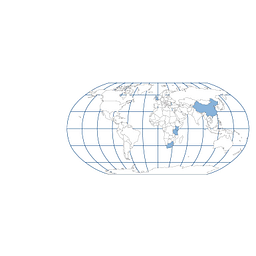
-

-