speaker
Conference Operator
Operator

Thank you for standing by. At this time, I would like to welcome everyone to the OmniLight Industries Incorporated first quarter 2026 investor conference call. All lines have been placed on mute to prevent any background noise. After the speaker's remarks, there will be a question and answer session. If you would like to ask a question during this time, simply press star followed by the number one on your telephone keypad. I would now like to turn the conference over to Amy Bertrano Palmer, CFO. The floor is yours.

speaker
Amy Bertrano Palmer
CFO

Thank you. Good afternoon, and thank you for joining us. With me today is our Chief Executive Officer, Dave Robbins. Our call is being recorded and will be available for playback, the details of which are in our press release issued yesterday. The purpose of this call is to provide an update on OmniLight's financial performance and operations as we filed our first quarter 2026 results yesterday, May 27th. After our remarks, we will open up the line for any Q&A. If you have not received a copy of our press release, which was issued yesterday morning, you can find it on our website at www.omi-light.com. or email at d.robbins at omni-light.com to request a copy. Before we get started, I would like to remind you that today's discussion will and may include forward-looking statements, including information regarding OmniLight's performance based on our views of the company's business and the environments in which it operates, our future plans, objectives, business prospects, and anticipated financial performance. These forward-looking statements are subject to future risk and uncertainty and could cause our actual results or performance to differ materially. We are also mindful of the risks and impacts of changes in the health of our general economy, including the effects of the current U.S. financial market, U.S. global commercial aerospace markets, and the U.S. Defense Department. All forward-looking statements should be considered in conjunction with the cautionary statements contained in our press release and risk factors included in OmniLite CBAT filings. The company disclaims any obligation to update any forward-looking statements that may be discussed during this call. I would also mention that in addition to reported financial results in accordance with International Financial Reporting Standards, or IFRS, during our call, we may also discuss or reference some non-IFRS financial measures, specifically adjusted EBITDA and free cash flow. A reconciliation of these non-IFRS metrics, if applicable, is included in our filings. Lastly, unless otherwise noted, any reference or discussion of our financial results or metrics are in U.S. dollar. I would like to now turn the call over to Dave. Dave?

speaker
Dave Robbins
CEO

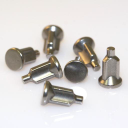
Thanks, Amy. Good afternoon, everyone, and thanks for joining us. I'd like to make a few comments about our first quarter 2026 performance, followed by comments on our current business. First quarter 2026 revenue of 4.4 million was an increase of 33% compared to prior year first quarter. The adjusted EBITDA in the quarter came in at $858,000, representing 110% increase compared to prior year first quarter. The strong quarterly performance resulted largely from a healthy mix of production at our electronics and forming operations, notably from their respective top customers. Bookings for the first quarter of 4.9 million translates to 1.11 to one book to bill. Our third successive positive book to bill and pushes the backlog to 9.1 million, which is a record for the company. Omni light metal forming bookings in the quarter were particularly strong. driven by large reorders for high-strength structural forged collars used on commercial air transport and military airframe and fuselage, as well as annual release for munition components for NATO forces. Given the global demand for security of which missile and drone defense and air superiority are major components, as well as strong air transport levels and expanding new plane build rates, there is an increasing number of part qualification opportunities for both new designs and supplier replacement efforts, starting with electronics, but also for metal forming and casting components. With that, I'd like to turn the call over to Amy. Amy?

speaker
Amy Bertrano Palmer
CFO

Thanks, Dave. Dave has addressed our revenue and outlook, and I'll just make a few comments regarding our cash. Adjusted free cash flow, as defined as cash flow from operations minus capital expenditures and any lease expenses, was a source of approximately $173,000 in the quarter, which is an increase of 18% over the prior year. We did use approximately $45,000 for CapEx purchases for improvements in our manufacturing process during the quarter. We finished the quarter with $3 million in cash and no borrowings, which is up from $2.8 million at year end. This now completes our prepared remarks. We would like to open the call up for questions.

speaker
Conference Operator
Operator

Thank you. We will now begin the question and answer session. If you would like to ask a question, please press star then the number one on your telephone keypad now to raise your hand and join the queue. If you would like to withdraw your question, simply press star one again. Once again, to ask a question at this time, please press star, then the number 1 on your telephone keypad. Your first question comes from Brooklyn Duggle with Shandern. Your line is open. Hi, Dave. Hi, Amy. Hello. Dave, we've had quarters with similar revenue levels. before, but never with margins like this. You know, in Q1, our gross margin was 33% versus 24% a year ago, and our margin hit 20%. You know, the best it's been in eight quarters by a wide margin. Can you talk through what specifically drove that this quarter, you know, especially given that, you know, it looks like DPCAS is still losing money? And how much of it reflects the Monzyme and VP-Cas shipments that you'd mentioned from Q4 to Q1?

speaker
Dave Robbins
CEO

Yeah, Rukun, you never have just a simple question, but I appreciate that. Let me see if I can, I'll get to it all. So, I think if you look back at Q1 of 2024, you'll see some similar numbers. And actually, probably it's similar performance. So, But you're right, it's been a little bit rare. And really all that's going on there is that, and I noted in the press release, is that, you know, it's a pretty good proportion of mix, so a lot of production. You know, leading up to Leading up to that was a lot of good booking. So I pointed to that in Q4 and in Q3, increasing backlog. It's a lot of production stuff. So we like to see a mix of new products because that's what's driving growth for future. But we also like to see healthy production. And I think we also just had a quarter. We're building performance parts. you know, precision parts everywhere across the company. And, you know, I think part of it was mix, good proportion of production. And we executed pretty well in the core. I don't think it's any more complex or less complex than that.

speaker
Conference Operator
Operator

Thanks. That's helpful. And does electronics and forging look front-end loaded this year, or are you expecting more of a steady cadence as we go through 2026?

speaker
Dave Robbins
CEO

That's the difference between 2024 and 2026. 2024 was a lot of front-end loaded, and it's different. The cadence of bookings have been now steady for three straight quarters. My expectation from my comments and my expectation is that you know, that's going to continue. Yeah, that's probably the difference between, you know, 2020, the start of 2024 and where we are in 2026.

speaker
Conference Operator
Operator

That's great. And I just wanted to talk about DPCAST a little bit. If you can talk through what the path is to break even at DPCAST and, you know, when should we expect the renegotiated pricing to show up? I mean, if you could talk through some of the operational and contract levers you have there, and what margin profile should DDCAS have if it were at a steady, normalized, reasonable revenue run rate?

speaker
Dave Robbins
CEO

Well, as we noted, it's more back in the year. It just happens that a lot of the parts for that contract happen to be in the second half of the year. So, you know, we're not going to get the benefit in these first two quarters, but It's there, and the level, you know, I think I mentioned this, at least our expectation when we announced that the price increase is – we didn't have, you know, total visibility, but our expectation was that the level at increased prices – you know, the level of numbers of parts and quantity of parts was not going to go down as a result of the price increase. It was either going to be flat or up. Now, at that time, we didn't have any real data, but it was an expectation. We do have an expectation now. I mean, more than expectation. The reality is the number is healthy. It's at least flat, you know, in terms of quantities of parts. And actually a bit more, so it's more, but it is back-end loaded in the year. So we won't enjoy the majority of the benefit of that until later in the year.

speaker
Conference Operator
Operator

Okay, that's very helpful. And I wanted to just talk about the backlog a little bit, because I think in Q1 we exited with a backlog of about 9.1 million members. I think the general algorithm has been roughly half of the backlog converts to revenue the next quarter plus the spot market, which kind of held this quarter because, I mean, last quarter the backlog was $8.8 million and our revenue is $4.4, which is roughly half the backlog. So, you know, applying that same math and looking forward, the $9.1 million in backlog suggests about $4.5 million in Q2 revenue before spot. Is that sort of the right way to think about it, or are there longer lead time items in the current backlog?

speaker
Dave Robbins
CEO

No, that formula is still there. I mean, of course, there's noise around that formula, but that general formula is still – there's nothing really that's deteriorated or changed from that. We have a little bit of backlog that's maybe on a disproportionate that's in 27 on a comparative basis to 25, let's say, or late 25, but not enough to matter. That general formula is pretty good.

speaker
Conference Operator
Operator

Okay. That's great. Thank you. If you look at some of the levers to the gross margin and the margin that we saw in Q1, given sort of what our expectations for revenue are, do you expect the same kind of throughput to plant going into Q2 that we managed to take advantage of in Q1?

speaker
Dave Robbins
CEO

Well, you know... I think in the same zone, you know, when we're operating at those operating levels with good mix, you know, yeah, we should be – I think that was a particularly, you know, probably, you know, particularly everything went well quarter. They don't always go that well, but within the same zip code and region, yeah, there's no reason. You know, I think we've got a fairly healthy mix. Our backlog now consists of a pretty healthy mix of, production versus new starts. So, I would expect that we can continue on, you know, our profit margin target, you know, that we're targeting, yeah.

speaker
Conference Operator
Operator

Dave, just in terms of production versus new starts, It seems like the operating leverage is clearly showing off as the top line grows. And, you know, it seems serious that the company has the capacity to support growth. Can you talk to, you know, your sales initiatives to qualify on as many programs as you can with the primes, maybe cross-selling on new programs, positioning for second sourcing opportunities, you know, at least as a company, what's the push vector to try and increase as many program counts as we can from here?

speaker
Dave Robbins
CEO

So it's a little bit different, and each technology is slightly different, but they also have some similarities. We're putting high-performance components on high-value assets, on platform, so you've got to get qualified. That's probably the unique, not the single thing, but it is one thing that it is across the board. You don't put things on missiles and jets and different types of applications without going through an exhaustive qualification process, which means that, you know, it's all about a customer relationship. So the majority of our business, I wouldn't say exclusively, is the cycle to get more business is where you've performed and your customer expects, you know, you're a known entity, you know, you don't have bad quality, you're on time. That's your right to say, okay, let's go back for some more. So I would say, number one, same customer, sometimes even same platform, new product. where they might be having trouble with another vendor or a new platform itself where it needs a new part. So that's number one, our biggest funnel, where we start to fill the funnel is where we built that track record. If we were making more commoditized parts and it wasn't such a, qualification wasn't such a big deal, it might be different. But we were also looking strategically at new customers that have high-value platforms that, you know, that we'd like to start, you know, cultivating a new customer. And we've had a few of those. I think, you know, two or three quarters ago I mentioned, for an example, some Inconel Fasteners, a new family of Inconel Fasteners. That was a new customer. It's taken a while for that, let's say, to mature into a full production at the same kind of quantities that we're seeing with some of our other our number one customer, let's say. But it's growing. And I think where we've kind of hit, at least at electronics and in fasteners, I think we've hit some level of critical mass where we have enough platform wins, enough wins that, you know, we're sort of the – opening up the aperture for more product, you know, it's getting less, there's less resistance, right? So I would say, but now I would say, and that's particularly strong for fasteners. With electronics, it's slightly different. I think the opportunity is more for a brand new platform, brand new customer, because there's a lot of development going on to counter new threats that are happening. That's an opportunity. We're aggressively visiting customers and trying to introduce our products where we have somewhat unique products in the marketplace to get our new platforms as well as doing more, you know, the same style of business is doing more on the existing platform. So, for example, we might be on something on a factory where we're doing certain content and we understand that content. So, those are really outbound, you know, marketing efforts, but starting with, you know, our key customers. That's where it starts. And then, In casting, it's still similar. It's got a good footprint, you know, at its number one and two customer. So, you know, again, look for the platforms that have the highest growth opportunity where they have a need for precision and get in front of them with our capability.

speaker
Conference Operator
Operator

Thanks, Dave. That's super helpful. Final question for me and... and then I'll read the floor. So, in the segmentation, in one of your filings, it looks like the Canada segment, which is TPCAS, as I understand it, had a net loss of about $262,000 this last quarter. So, I'm assuming, you know, on an EBITDA basis, I mean, that net loss is probably larger. And, you know, we did sort of 858,000 in EBITDA with a 20% margin. Is the right way to think about it that if DPCAT even gets to a break-even level by the end of the year and maybe even a little bit better than break-even, that the incremental sort of P&L should sort of make our margins look sort of even better as we round into the end of the year and going into next year? Is that just as a framework, is that the right way of thinking about it?

speaker
Dave Robbins
CEO

Well, you've got to remember, there are some costs in Canada that aren't related to, you know, specifically the DP, but I think you know that, right? So it almost appears like you've answered your own question. I mean, yes, you know, if they do better... That will help our budget. I don't know if I oversimplified what you were asking.

speaker
Conference Operator
Operator

Yeah, no, no. I mean, that's very helpful. Sometimes it's easier to have you answer the questions than me answer my own questions. It gives me a little bit more confidence. But that's it for me. That's great, Dave. I really appreciate it. Thank you much. You got it. Once again, if you would like to ask a question at this time, please press star from number one on your telephone keypad. That concludes our question and answer session. I would now like to turn the conference back over to our presenters for any further remarks.

speaker
Amy Bertrano Palmer
CFO

Thank you. Thank you again for joining us today. We look forward to discussing our Q2 results in August. Thank you.

speaker
Conference Operator
Operator

Bye-bye. Thank you. Thank you for attending. You may now disconnect and have a wonderful rest of your day.

Disclaimer

This conference call transcript was computer generated and almost certianly contains errors. This transcript is provided for information purposes only.EarningsCall, LLC makes no representation about the accuracy of the aforementioned transcript, and you are cautioned not to place undue reliance on the information provided by the transcript.

-

-